Wednesday, 5 February 2020

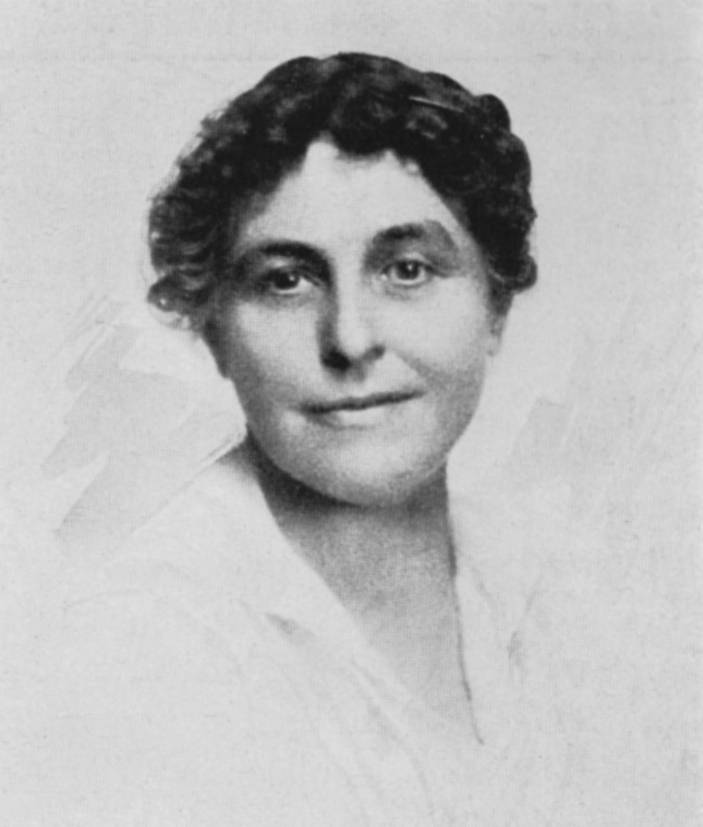
Seeking information regarding Amanda Bebbington (1880 - 1927) of Widnes who wrote a poem in memory of Thomas Mottershead, VC, DCM

Can anyone help please?  I am trying to find out more about Amanda Bebbington (1880 - 1927) from Widnes who wrote the poem below.

On Wednesday, 11th April 1917, the Mayor of Widnes held a concert in the Premier Picture House for the "Memorial Fund to the late Sergeant Thomas Mottershead V.C, D.C.M",

The flyer for that concert included a 'TRIBUTE TO "A VERY GALLANT SOLDIER"', by Amanda Bebbington, also published in the "Weekly News" on 16 February 1917.

TRIBUTE TO "A VERY GALLANT SOLDIER"

If I strove to tell this story as such story should be told,
I should write in jewel letters on a leaf of shining gold;
With a diamond pen to shrine each word as crystal as a tear,
And a blood-red fire of rubies to flash the record clear.

Oh! I cannot tell this story, for the flame is in my heart,
And my soul's afire with a vision of the mighty hero-part;
And I spill the diamonds, in tears, that blind my mortal eyes
As I dream the horror of that flight through the unpitying skies.

Oh! A nation's heart beats quicker with a proud exultant glow;
For such deeds as these can thrill her through her agony of woe.
And the England that doth render him her amplest meed of fame
Counts richest jewel in her crown her brave son's honoured name.

I leave the story all untold - too feeble are my words.
The ocean's diapason and the storm wind's thundering chords,
The very stars that strew the heavens, the suns that ceaseless roll
Shall sing and blaze the brighter since they keep that hero-soul.

Written by Amanda Bebbington and published in the "Weekly News", 16th February 1917.

The 1911 Census lists an Amanda Bebbington married to Joseph Henry Bebbington and living in Belvoir Road Widnes, Widnes, Lancashire & Cheshire, England.  They had a daughter called Stella who was born in 1911.  Research from Debbie Cameron regarding Amanda found this: she was born Harriet Elizabeth Amanda Gittings in 1880 in Wednesbury, Staffordshire. She married Joseph Henry Bebbington, an engineer, in 1902. They had at least one child, Stella, who was born in 1911. Amanda died in 1927.

Thomas Mottershead, VC, DCM (1892 – 1917) – British WW1 aviator hero

On 7th January 1917, near Ploegsteert Wood in Belgium, Thomas was on patrol in FE-2d (serial number A39) with observer Lieutenant W E Gower, when he was engaged in combat by two Albatros D.III of Jasta 8. Lieutenant Gower managed to hit one plane and put it out of the action, but the
second Albatros, which was flown by German 'ace' Lieutenant Walter Göttsch (who had 20 victories to his name), hit the British aircraft, piercing the petrol tank and setting the aircraft on fire.

Enveloped in flames which his observer was unable to extinguish with a handheld fire extinguisher, Thomas was badly burned but nevertheless managed to take his aircraft back to the Allied lines and make a successful forced landing. The undercarriage collapsed on touching down however,
throwing the observer clear but pinning Thomas in his cockpit. He was subsequently rescued but died of his burns five days later.  Thomas was buried in Bailleul Communal Cemetery, Bailleul, France.

Sergeant Thomas Mottershead was awarded the only Victoria Cross (V.C.) ever awarded to a non-commissioned RFC officer during the Great War. Thomas’s medal was presented to his widow by King George V in a ceremony in Hyde Park, London on 2nd June 1917.

A sum of nearly £1,000 was raised when an appeal was launched in 1917 – yet neither widow or son received a penny of the money collected. It was over 50 years later that a civil servant found the records of the fund and the money. It was then used to endow the Mottershead Scholarship at Widnes Technical College.

There is a memorial to the memory of Thomas Mottershead, VC in Victoria Park, Widnes, which was unveiled in April 2018.


Monday, 13 January 2020

Jelena Spiridonovic-Savic (1891 – 1974 –Serbian poet

In order to highlight the global impact of the war I have
tried to find poets from as many countries as possible. For that reason
some of the poems included in this project are not about WW1.

The Austro-Hungarian Empire invaded Serbia in late July 1914.   Serbia's victory at the Battle of Cer in August 1914 was the first victory for the Entente Powers in the First World War.

In all, Serbia lost 1,100,000 people during the War - civilians and military deaths.


Jelena
Jelena was born on 11th January 1891 into a family of doctors – her parents were Michael and Olga Spiridonovic.  After leaving school, Jelena continued her studies at the French College in Trieste before travelling to New York, Milan and Vienna to study philosophy.

Jelena married Vladislav Savic, Consul General of Yugoslavia, who was also a poet and writer.  He started the Socialist Party of Serbia in 1903.

Jelena, who published her first volume of poetry in 1926, was a member of the Pen Club and the Society of Writers of Serbia.  She died in Belgrade in September 1974.

Sunce (Translation: Sun)

I ponesi me,
ponesi tako, u sjajnom
dugorn putu
tvoga zlaćanog zrak
O, Sunce,
Svetlosti moćne
vodi me
iz Carstva mraka.

First published in “Saa Uskih Staza” (Tr. From the Narrow Paths) (Belgrade, Izdanje SB Cvijanovica, 1919

Flora Sandes WW1

For information about Flora Sandes, the English woman who fought for Serbia during WW1, please see www.inspirationalwomenofww1.blogspot.co.uk

Saturday, 7 December 2019

Akiko Yosano (1878 – 1942) – Japanese Poet, writer, feminist, pacifist and social reformer


Japan was one of Britain's allies during the First World War

Akiko Yosano was the pen-name of the Japanese writer, poet, feminist, pacifist and social reformer Sho Ho, who was born on 7th December 1878 in  Sakai near Osaka to a wealthy family.   Her father realised his daughter's intelligence and allowed her to have a good education.   Akiko began writing poetry as a teenager.

When she was eleven years old Akiko was in charge of the family business making and selling Japanese sweets. 

In 1901, Akiko married Tekan Yosano, who edited the poetry magazine "Myojo" (Translation: "Bright Star") a publication in which  many of Akiko's poems were printed.   She also had her first volume of poems published in 1901.

Akiko wrote a tremendous number of poems and essays and worked tirelessly for the cause of women's education, helping to found a school for girls - the Bunka Gaguin.    She died at the age of 63 on 29th May 1942, leaving a legacy of tens of thousands of poems.  Her poem "Thou shalt not die" dedicated to her brother during the Russo-Japanese War, was set to music and became a protest song.   Akiko Yosano is buried on the outskirts of Tokyo.

Thou shalt not die
O my young brother, I cry for you
Don't you understand you must not die!
You who were born the last of all
Command a special store of parents' love
Would parents place a blade in children's hands
Teaching them to murder other men
Teaching them to kill and then to die?
Have you so learned and grown to twenty-four?

O my brother, you must not die!
Could it be the Emperor His Grace
Exposeth not to jeopardy of war
But urgeth men to spilling human blood
And dying in the way of wild beasts,
Calling such death the path to glory?
If His Grace possesseth noble heart
What must be the thoughts that linger there?

Members of the Japanese Red Cross Corps leaving for Britain c. 1916


Monday, 4 November 2019

Jean McKishnie Blewett (1872 - 1934) - Canadian journalist, author and poet

Jean Blewett featured in the very first exhibition of Female Poets of the First World War held in November 2012 at The Wilfred Owen Story, Wirral, UK, which featured her poem “What Time the Morning Stars Arise” 

Jean Blewett was born Janet McKinshie in Scotia, Kent County, Ontario.  Her parents, John McKishnie and his wife Janet, nee MacIntyre were Scottish - from Argyllshire.   Educated in local schools and at St. Thomas Collegiate Institute, Jean began writing at an early age and published her first novel in 1890 and her first collection of poems in 1897. She also wrote under the pen-name Katherine Kent. Jean’s brother, Archie P. McKishnie, was also a well-known writer.

Jean married Bassett Blewett, who was from Cornwall. She joined the editorial staff of  “The Globe”, a Toronto newspaper and in 1898 she became editor of the newspaper’s Homemakers Department.   Jean also wrote for “Everywoman’s World” in Toronto.

In 1919, assisted by the Imperial Order of the Daughters of the Empire, she published a booklet titled Heart Stories to benefit war charities.  Jean also regularly lectured on topics such as temperance and suffragism.  She retired from journalism in 1925 and died in Chatham, Ontario on 19th August 1934.

“Canadian Poems of the Great War” Chosen and Edited by John W. Garvin (McClelland & Stewart Publishers, Toronto, 1918)

https://archive.org/stream/canadianpoems00garvuoft/canadianpoems00garvuoft_djvu.txt

Mount Cavell
“Mount Cavell”

Look yonder where the Rose of Sunset leans
A Blessed Damosel on golden stair-
Whose lightest touch illumes, incaradines,
And kindles flames of splendour everywhere.

Mount Cavell but a little time ago
Seemed typical of majesty severe,
Aloof, far-off, with diadem of snow-
Lo, gone the grimness, and the air austere !

The Rose of Sunset in a shining mood
Has paused to touch him with her fingers warm,
To weave her crimson petals in a hood,
For his great head, with all her subtle charm.

For cloak she shakes from out her royal lap
Whole webs of vapour, soft, of silken mist,
The rarest colours ever dyed, mayhap,
Mauve pink, and Persian rose, and amethyst.

With blues of many shades, blues somber, gay,
Blending together in a dream of light,
The sun-thrilled blue of perfect summer day,
The star-kissed blue of perfect winter night.

That rarest blue, in midnight vision given
To such as vigil keep, for His dear sake,
Who see across the flowery meads of heaven
The shining pathway that the angels take.

Fair, fair, this cloak the Rose of Sunset weaves,
Ere the invading twilight dulls and blurrs,
Weaves out of golden mist and ruby leaves,
While all the glamour of the skies are hers.

Mount Cavell did we dare to call thee grim
When first we saw thee standing bald and bare,
Ere vet this glory clothed thee like a dream,
Kindled to lip a thousand beauties fair?

Nay, grandeur is thine own staunch and immoved
Thou standest forth a splendid monument
To her, the brave, the steadfast, the beloved
Who sleeps upon a foreign shore, content.

A monument the years will not efface
A speaking monument that will extoll
A woman s tenderness, and truth, and grace,
The strength and courage of a woman s soul.

The Rose of Sunset steals away to sleep,
And, following in her train of palest gold,
Are soft-veiled, fleecy clouds like flocks of sheep
That hurrying go to find some far-off fold.

Above Mount Cavell mark the shadows grey,
Shot through with one great opal tinted bar;
And just between the darkness and the day
Gleams down upon the hills one silver star.


Jean Blewett

Mount Edith Cavell is a mountain located in the Athabasca River and Astoria River valleys of Jasper National Park, and the most prominent peak entirely within Alberta, Canada. The mountain was named in 1916 in memory of British nurse Edith Cavell.

The Wilfred Owen Story and Study Centre is currently in The West Kirby Arts Centre, 29 Brookfield Gardens, West Kirby, Wirral, UK, CH48 4EL. Tel.:
07539 371925.   The WOS is the first permanent exhibition to commemorate the genius of the Peninsula’s most famous adopted son.


Saturday, 2 November 2019

Sylvia Townsend Warner (1893 – 1978) - British writer and poet; WW1 munitions worker

Sylvia Nora Townsend Warner was born in Harrow on the Hill, Middlesex, UK on 6th December 1893. Her parents were George Townsend Warner  and his wife Eleanor Mary, née Hudleston, who was known as Nora.  George was a house-master at Harrow School and was associated with the prestigious Harrow History Prize which was renamed the Townsend Warner History Prize in his honour, after his death in 1916.

Educated at home by her father, Sylvia worked in a munitions factory during the First World War.  She died on 1st May 1978, leaving a legacy of a large volume of literary works. 

Syvlia’s WW1 poetry collection was entitled “The Espalier: poems” (Chatto & Windus, London, 1925).

If you live near London, UK, you will be able to hear some of Sylvia’s war-time poems at an event organised by Boulevard Theatre and Live Canon Ensemble: War Poets, Sunday, 10th November 16h.30 at The New Boulevard Theatre, 6 Walker's Court, Soho, W1F 0BT, UK To book tickets please follow this link https://boulevardtheatre.co.uk/…/sunday-service-poetry-10-…/

This performance by the Live Canon ensemble showcases several centuries of war poetry. The programme features well-known poems from the First World War, including work by Sylvia Townsend Warner, May Herschel Clarke, Edith Sitwell, Helen Dircks, Eva Dobell. Rupert Brooke, Edward Thomas, Siegfried Sassoon and Wilfred Owen and work from other conflicts - the Crimea, Second World War, Vietnam, Iraq, Liberia and Afghanistan - and foregrounds some of the most extraordinary war poetry by women from every generation. Live Canon perform from memory – these are not readings – and this is a rare opportunity to hear this collection of poetry performed live.

To book tickets please follow this link
https://boulevardtheatre.co.uk/whats-on/sunday-service-poetry-10-november/?fbclid=IwAR0khNmJ1o7QugvLcNuoQirS3qpVB7x_ZzUhCjW1uBWGlQxvadF5dJfJ7XY
Sources: Catherine W. Reilly “English Poetry of the First World War: A Bibliography” (St. Martin’s Press, New York, 1978) p. 328.
https://en.wikipedia.org/wiki/Sylvia_Townsend_Warner

Photo from https://theblankgarden.com/2017/12/05/sylvia-townsend-warner/

Saturday, 12 October 2019

Grace D. Vanamee (1867 – 1946) - American Suffragist, Teacher, Writer and Poet

Grace Davis was born on 15th September 1876 in North Adams, Massachusetts, United States. Her parents were George Davis and his wife Electra, nee Magoon.

Grace graduated from Drury High School, North Adams in 1894 then attended Bliss Business College in 1895 before going to Emerson College Oratory, Boston, in 1899, where she followed a post-graduate course in 1900.

Grace then became a platform reader and lecturer and taught in private schools from 1901-1907. She was a lecturer in city schools in New York, and Brooklyn Institute Arts and Sciences, 1907-1909.  In 1909, Grace married lawyer William Vanamee, a widower who died in 1914.

During the First World War, Grace was Assistant to the chairman of the American Poets’ Ambulance Committee and secretary of the Italian War Relief Committee of New York.

From 1915 Grace was connected with the American Academy Arts and Letters, becoming assistant to the president from 1921-1941 and assistant secretary and assistant treasurer of the National Institute of Arts and Letters, 1925-1940. She served as acting director of the Hall of Fame in 1920.

In 1920, Grace became Chairman of the Republican Women’s State Speaker’s Bureau and a member Women’s Republican State Committee.

Grace died on 10th December 1946.

Grace's poem "The Sequel - He kept his Rendezvous with Death" was first published in the magazine “The Art World” - January 1917, Volume 1, No. 4 – reproduced by kind permission of Matt Jacobsen, editor of the website www.oldmagazinearticles.com

Here is a link to a report about the American Poets Ambulance Committee in WW1:
https://archive.org/stream/americanpoetsamb00john/americanpoetsamb00john_djvu.txt

Friday, 4 October 2019

Anna Jakobsen a Danish poet who wrote a poem about her son who was killed


With grateful thanks to the wonderful Pike Grey on Twitter who not only found this poem for me but also translated it from the original Danish. Another WW1 Mother's anguish ...

From Pike Grey 1914-1918 @PikeGrey1418
·
"My Boy" a short Danish wartime poem written by Anna Jakobsen, a mother of a fallen soldier from the Danish minority in Schelswig who were compelled to fight in the German army.
I've translated is as close to the original as I could.

#WW1 #WWI #FWW #GreatWar #History #MilitaryHistory #Poem #Poetry